ArticleslgStudy

biology

Nutrition in classical antiquity

Nutrition in classical antiquity is a biology topic covered in the lgStudy science library. This page brings together a partial reference excerpt, illustrations, worked examples, real-world applications and a short study plan, so you can understand Nutrition in classical antiquity rather than just read about it. In short: Classical antiquity is the period of cultural history spanning from the 8th century BC to the beginning of the Middle Ages (which began around 500 AD). The major civilizations are those of the Mediterranean region, ancient Greece, ancient Rome, and southwest Asia.

Nutrition in classical antiquity — main illustration
Nutrition in classical antiquity — illustration

Key takeaways

  • Nutrition in classical antiquity belongs to biology; place it in that map before memorising details.
  • Learn the definition first, then one example that makes the definition concrete.
  • Connect Nutrition in classical antiquity to a quantity you can measure, compute or draw — that is where exam questions come from.
  • Reproduce the core statement of Nutrition in classical antiquity from memory before moving on to harder problems.

Reference excerpt

Classical antiquity is the period of cultural history spanning from the 8th century BC to the beginning of the Middle Ages (which began around 500 AD). The major civilizations are those of the Mediterranean region, ancient Greece, ancient Rome, and southwest Asia. Nutrition consisted of simple fresh or preserved whole foods that were either locally grown or transported from neighboring areas during times of crisis. Physicians and philosophers studied the effect of food on the human body and they generally agreed that food was important in preventing illness and restoring health.

Food of antiquity People ate various types of food; consumers had choices from dairy (milk and cheese), fruits (figs, pears, apples, and pomegranates), vegetables (greens and bulbs), grains and legumes (cereal, wheat, barley, millet, beans, and chickpeas), and meat (beef, mutton, fowl, mussels, and oysters). Food was most often fresh, but the processing of food aided in the preservation for long-term storage or transport to other cities. Cereals, olives, wine, legumes, vegetables, fruit, and animal products could all be processed and stored for later use. Cereals were often processed and stored in the form of bread, flat-cakes, and porridge. Legumes were also most often processed and stored as pulses and eaten with bread to enhance the flavor. Cereals were most nourishing providing essential macro- and micronutrients to consumers. Cereals sustained individuals with sufficient amounts of protein, vitamin B, vitamin E, calcium, and iron. Fruits and vegetables provided vitamin A, vitamin C, vitamin D, and half the dietary fiber needed for health support.

Food shortage Cities depended on trade with agricultural farmers and neighboring cities for food supply due to the lack of land cultivation area. Food supply was altered by numerous events such as climate, location, and distribution. Weather drastically affected the amount of produce harvested during a growing season. Climate often fluctuated in the Mediterranean region with varying temperatures and volumes of precipitation; these two factors also affected the quality of soil available to farmers. Soil composition mainly depended on location, but the climate affected the moisture retained within the soil. If the growing season was not prosperous then cities would have to resort to trade as a means for food supply. This often made food distribution difficult due to political disagreements and issues with transportation. To combat hunger due to inadequate food supply people would eat twigs, roots of plants, bark from trees, and each other as a last resort. Food shortages were frequent but did not last long enough to generate famine.

People of interest

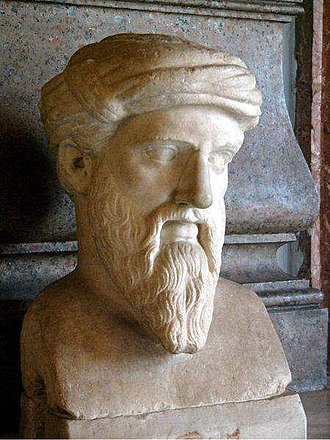
Pythagoras (570 BC – 495 BC) was a Greek philosopher, mathematician, and is also considered to be "the Father of Ethical Vegetarianism". He believed that in order to obtain the highest level of spiritual and physical health it was necessary to follow a lifestyle that included a vegetarian diet which excluded meats and other flesh foods. Anaxagoras (500 BC – 428 BC) was also a Greek philosopher, he suggested that foods that we ate contained fragments that were needed for growth in the body. His belief was that "everything is in everything, at all times", physical characteristics (hair, nails, flesh, etc.) were generated from foods that contained those same substances. Hippocrates (460 BC – 377 BC) was a physician known as the "father of medicine", his nutritional advice was based on the presence of the four humors in the body. Plato (428/427 BC – 348/347 BC) was a Greek philosopher and mathematician; his idea of a healthy diet consisted of balance and moderation of cereals, fruits, vegetables, dairy, with a strong emphasis on the moderation of meat and wine. His belief is that excess food from one source would lead to future ailments. Galen (129 AD – 216 AD) built much of his work by challenging the writings of others. He was an admirer of Hippocrates because of the work he had done in the field of medicine. Galen believed that Hippocrates had stated all that needed to be known about nutrition, and he would interpret his work by the presentation of his own knowledge.

Medicine The humoral theory of medicine was central to medicine during antiquity and for centuries following. Physicians believed that the body contained a mixture of bodily fluids, the four humors: black bile, yellow bile, phlegm, and blood. They assessed a patient's degree of health based on the balance of these four bodily fluids. Diet was the first prescribed treatment of disease followed by drugs, then surgery. Early physicians studied the different ways foods would affect the humors of the body by restoring health or causing disease. Utilizing knowledge about how humors were affected by diet physicians prescribed diets with balance, moderation, and timing in mind. Galen worked extensively on classifying foods according to how they interacted with the humors of the body. Galen had also noted that some foods had drug characteristics and for that reason during food preparation it was not uncommon to boil those foods two or three times.

See also Ancient Greek cuisine History of vegetarianism Food and diet in Ancient medicine

References

Footnotes

… excerpt ends here. Continue reading the full article.
Illustrations

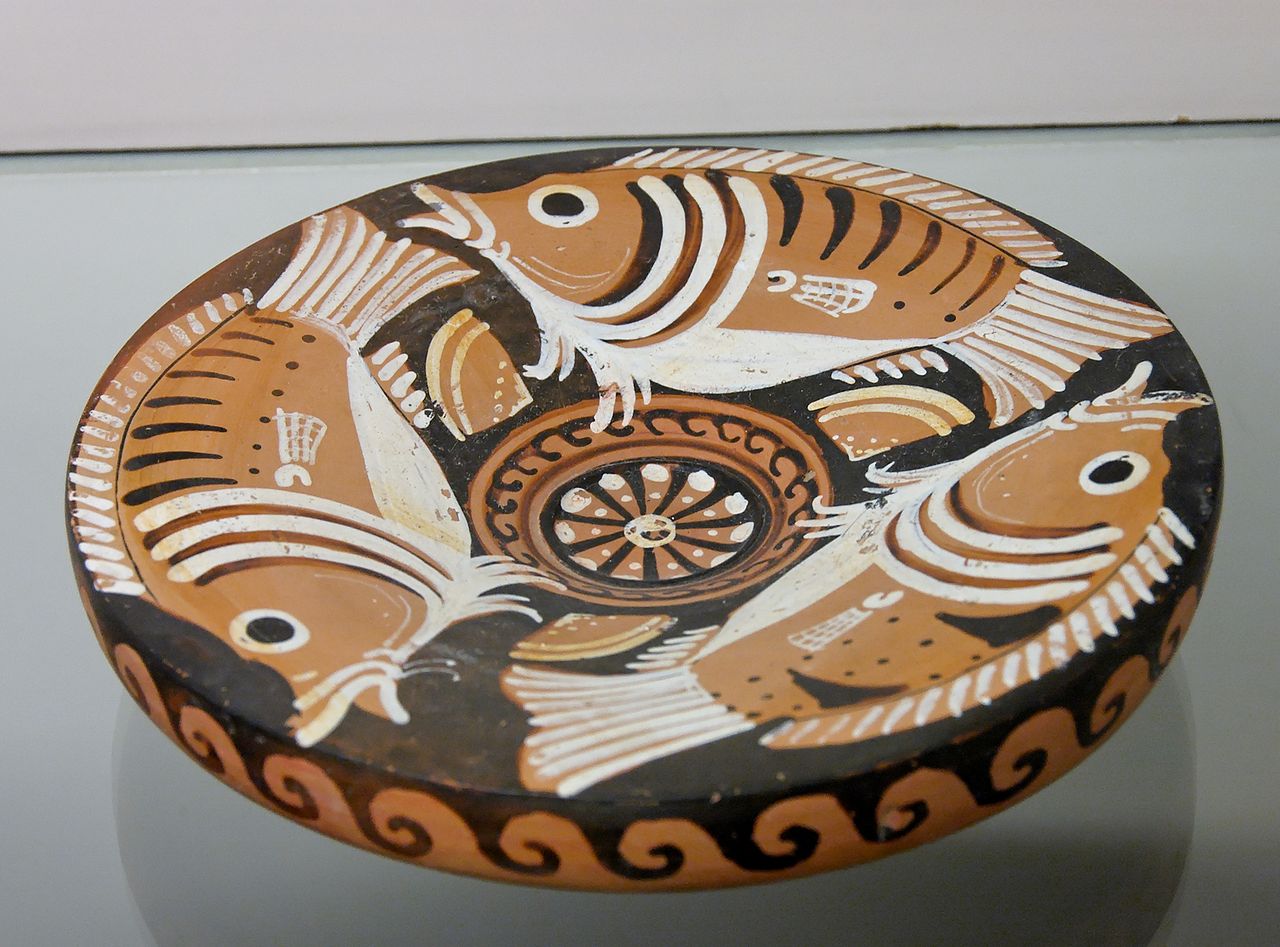
Nutrition in classical antiquity: Three sea-perch and three limpets. Apulian red-figured fish plate, ca. 340–320 BC. British Museum
Three sea-perch and three limpets. Apulian red-figured fish plate, ca. 340–320 BC. British Museum
Nutrition in classical antiquity: Kapitolinischer Pythagoras sculpture
Kapitolinischer Pythagoras sculpture

Worked examples

Example 1 — a first encounter with Nutrition in classical antiquity

Start with the simplest possible case. Write down what Nutrition in classical antiquity claims or describes in one sentence, then invent the smallest concrete situation in which that sentence is true. In biology, the smallest case is usually a single object, a single equation or a single measurement. Check that every symbol or term in your sentence has a meaning in that case.

Example 2 — changing one variable

Take the situation from Example 1 and change exactly one quantity: double it, halve it, or set it to zero. Predict what should happen to Nutrition in classical antiquity before you calculate. Comparing your prediction with the result is the fastest way to find out whether you understand the idea or only the words.

Example 3 — an exam-style question

Typical questions about Nutrition in classical antiquity ask you to (a) state it precisely, (b) apply it to given data, and (c) explain a limitation. Practise writing all three answers in under five minutes; the third part is what separates a full-mark answer from an average one.

Applications of Nutrition in classical antiquity

In research
Nutrition in classical antiquity appears in biology research whenever the underlying quantities have to be modelled precisely. Papers usually cite it as a starting assumption and then explore where it breaks down.
In technology and industry
Engineering practice reuses Nutrition in classical antiquity in design rules, simulations and safety margins. Knowing the idea lets you read a specification sheet and understand why the numbers look the way they do.
In the classroom
Nutrition in classical antiquity is common in secondary-school and first-year university syllabi. It links to neighbouring topics Ancient Greek cuisine, Ancient Roman medicine, Nutrition, so understanding it makes those chapters shorter.
In everyday life
Look for Nutrition in classical antiquity outside the textbook — in sport, cooking, traffic, electronics or the sky above you. An example you found yourself is remembered far longer than one you were given.

Affiliate

Preply — study more efficiently by working with a personal tutor. 50% off.

How to study Nutrition in classical antiquity in 20 minutes

  1. Read the reference excerpt below once, without taking notes.
  2. Close the page and write down what Nutrition in classical antiquity means in your own words.
  3. Compare your version with the excerpt and mark what you missed.
  4. Work through the three examples above with pen and paper.
  5. Explain Nutrition in classical antiquity out loud to somebody else — or to Teacher Smith in the lgStudy chat.

Frequently asked questions

What is Nutrition in classical antiquity in simple terms?

Classical antiquity is the period of cultural history spanning from the 8th century BC to the beginning of the Middle Ages (which began around 500 AD). The major civilizations are those of the Mediterranean region, ancient Greece, ancient Rome, and southwest Asia.

Why does Nutrition in classical antiquity matter?

Because it connects several biology ideas at once: it gives you a definition you can apply, a quantity you can calculate, and a way to check whether a result is plausible.

How should I study Nutrition in classical antiquity?

Read the excerpt, restate it from memory, then work through the examples and applications listed on this page. The five-step study plan above takes about twenty minutes.

What does this page cover?

It gives you a compact reference excerpt plus original lgStudy explanations, examples, applications and study material on Nutrition in classical antiquity.

Tags

  • Ancient Greek cuisine
  • Ancient Roman medicine
  • Nutrition

Keep exploring